Realizing the inefficiencies of the Base Mirror system, we led a transformation to a Base Function architecture, powered by Azure Functions, event-driven processing, and a persistence layer. This shift brought massive improvements in performance, cost reduction, and maintainability.
1️⃣ Event-Driven, Serverless Execution
We replaced Logic App workflows with an event-driven system using Azure Functions, delivering:
- Ultra-fast execution: Functions process requests in milliseconds, removing delays.
- Direct processing: Requests are processed immediately without multiple layers.
- Auto-scaling: Functions scale dynamically with traffic to prevent bottlenecks.
Cloud Events & AsyncAPI integration:
- Strong validation: Ensured robust architecture with Cloud Events and AsyncAPI for validation.
- Easy failure detection: Cloud Events capture metadata for quick failure identification.
- Event monitoring: Real-time event flow visibility and custom dashboards for tracking progress, success rates, and metrics.
- Event tracking: Full event lifecycle tracking for diagnostics and troubleshooting.
2️⃣ Smart Caching with a Persistence Layer
A major flaw in the previous system was that every request triggered an API call, even when data was unchanged. To fix this, we:
- Implemented Azure Cosmos DB and Redis Cache as a smart persistence layer.
- Stored frequently accessed data to reduce unnecessary API calls by over 80%.
- Improved response times by serving cached data instantly instead of always querying external systems.
3️⃣ Enhanced Observability & Debugging
Debugging and monitoring were revolutionized by:
- Centralized logging with Datadog and Sentry, allowing faster identification of issues.
- Automated queue restoration, ensuring messages weren't lost due to failures.
- Real-time monitoring dashboards, providing instant insights into system health.
4️⃣ Performance Overview & System Testing
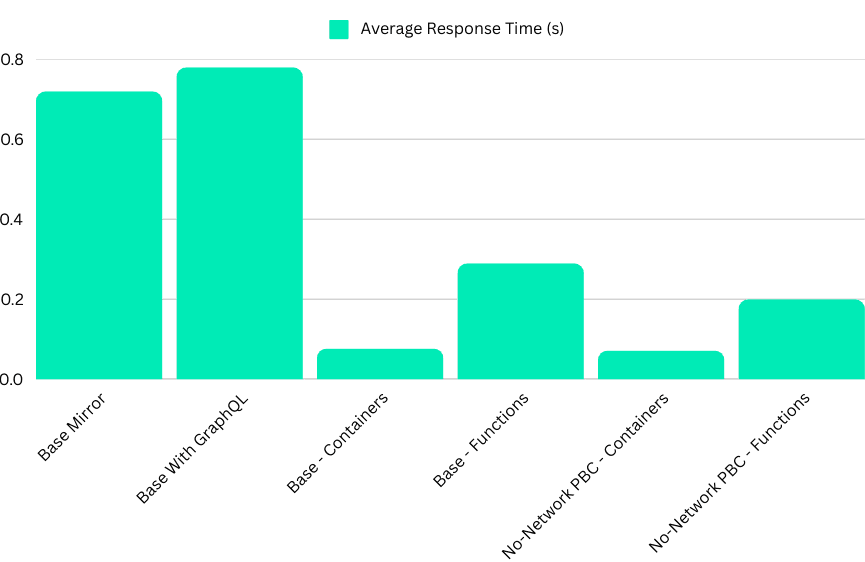
To ensure optimal performance, we conducted extensive benchmarking tests. Our approach involved:
- Load testing under real-world conditions to measure response times and throughput, ensuring the system could handle varying traffic loads efficiently.
- Profiling different architectures to determine the most efficient setup for scalability, considering factors like cost, speed, and resource usage.
- Custom performance evaluation services to help businesses identify and deploy the best architecture for their needs, ensuring that their systems can handle peak loads with minimal latency.
- Identifying the best approach for business systems: Through a combination of load testing and profiling, we pinpointed the ideal architecture that aligned with the business's goals and operational requirements. By optimizing key components of the system, we achieved a 90% performance boost, significantly improving response times and throughput, reducing operational costs, and enhancing the overall user experience.
5️⃣ Automated End-to-End Testing for Stability
Previously, the system lacked automated regression testing, making it fragile during updates. We integrated modern E2E testing technologies, enabling:
- Automated validation of business processes before deployment.
- Continuous stability checks to prevent regressions with each release.
- Scalable test execution using cloud-based testing platforms, ensuring high reliability across environments.
6️⃣ Seamless Interoperability: Unlocking the Full Potential of Base Functions
With an event-driven architecture, optimized caching, and enhanced observability, we introduced an Interoperability Layer—a centralized hub that orchestrates communication between Order Management Systems (OMS), Product Suppliers, APIs, monitoring tools, and frontend consumers.
By leveraging Base Functions, interoperability is no longer an afterthought—it is an integral part of a high-performance, scalable ecosystem.
- Decoupled Microservices: Each module operates independently, reducing failure risks and improving maintainability.
- Seamless System Expansion: Adding a new OMS, supplier, or API is as simple as plugging it into the Interoperability Layer—without requiring major changes to the existing system.
- Optimized API Calls & Caching: The system intelligently determines when to call an external service versus retrieving cached data, preventing redundant API executions and optimizing performance.
The complexity of achieving such an architecture using a Base Mirror approach would be overwhelming. Logic Apps would introduce unnecessary latency, dependencies, and excessive API calls, leading to an unmanageable and expensive system. With Base Functions, we eliminated these inefficiencies, creating a robust and scalable ecosystem.